
HR that fits the company you actually are
Most companies don't need a full-time HR executive. They need someone who has built HR functions before, knows what the next twelve months will demand, and can do the work, not just advise on it.
Four ways that show up below. Most engagements involve more than one.
HR Infrastructure
Building the foundation a growing company needs to scale.
Employee handbooks and state addendums
HR policies and compliance
HRIS selection and implementation
Onboarding and offboarding programs
Performance management frameworks
HR Business Partnership
Strategic HR support for leaders navigating growth and change.
Leadership coaching and manager development
Organizational design and workforce planning
Employee relations and investigations
Compensation and job architecture
Change management and communication planning
Talent & Growth
Helping companies hire and retain the right people.
Full-cycle recruiting
Recruiting process design
Interview training for hiring managers
Employer branding
Retention and engagement strategies
Not sure where you fit?
Book a free consultation.
Projects & Interim Leadership
Experienced HR leadership when your business needs it most.
Fractional Head of HR or HR Business Partner
Interim HR leadership during transitions
Mergers, restructurings, and organizational change
Compliance audits and HR process improvements
Benefits and payroll transitions
When you've outgrown HR-by-office-manager
Somewhere around [25–50] employees, HR stops being paperwork and starts being a function. Someone has to own hiring practices, manager training, org structure, and the decisions that get expensive when they're made badly. That person needs experience you can't reasonably ask a full-time employee to have, but the workload doesn't justify a full-time executive salary either.
That's the gap. I sit in it.
What that includes:
Serving as your HR leader on a fractional or retained basis, the person your leadership team brings people problems to.
Building the HR function itself: policies, processes, systems, and documentation.
Coaching managers who were promoted because they were great individual contributors.
Organizational design and workforce planning as your business grows.
Navigating employee relations, performance issues, and difficult conversations before they become legal or cultural problems.
Hiring key talent and building recruiting processes that scale with the business.
Designing compensation, performance, and career frameworks that support retention and accountability.
Providing practical guidance on compliance, risk, and employment decisions without creating unnecessary bureaucracy.
Helping founders and executives think through people decisions before they become business problems, not after they've already become expensive.
You'll never be surprised by an effective date again
Multi-state employers are exposed in ways they often don't realize. Minimum wage steps, paid leave expansions, pay transparency rules, WARN thresholds, new AI-in-hiring regulations: none of it announces itself, and most companies find out about a law only after they're already out of compliance.
Watching the legislative calendar is a job. It's one I've already built the system for.
What that includes:
Employee handbook development and revision (multi-state and state-specific addenda)
Policy review against current and pending employment laws in every state where you operate
Legal & Compliance Dashboard, a live docket of upcoming regulatory changes, effective dates, priority levels, and recommended actions, yours to keep
Employee classification review (exempt/non-exempt and contractor vs. employee)
Job description review and documentation to align with business needs and legal requirements
I-9 and personnel file audits to identify compliance gaps before they become liabilities
Leave of absence compliance (FMLA, ADA, state leave, and accommodation processes)
Performance documentation and disciplinary process design to reduce legal risk while supporting managers
HR forms, templates, and required notices (offer letters, acknowledgments, corrective actions, separation documents, etc.)
HR compliance audit with prioritized recommendations and an implementation roadmap
Multi-state expansion guidance helps you understand what changes when you hire in a new state before you make the offer.
Pay decisions you can explain
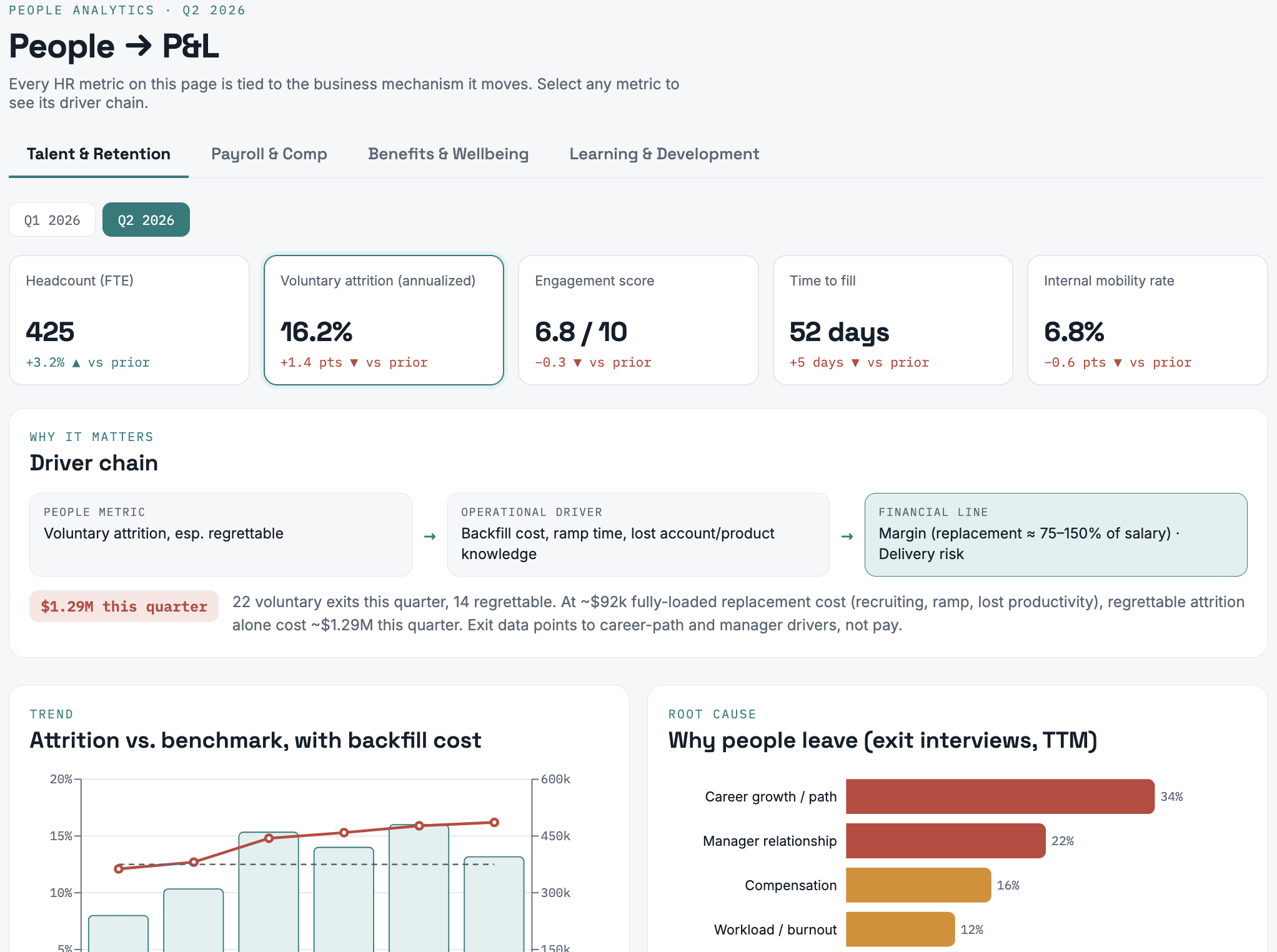
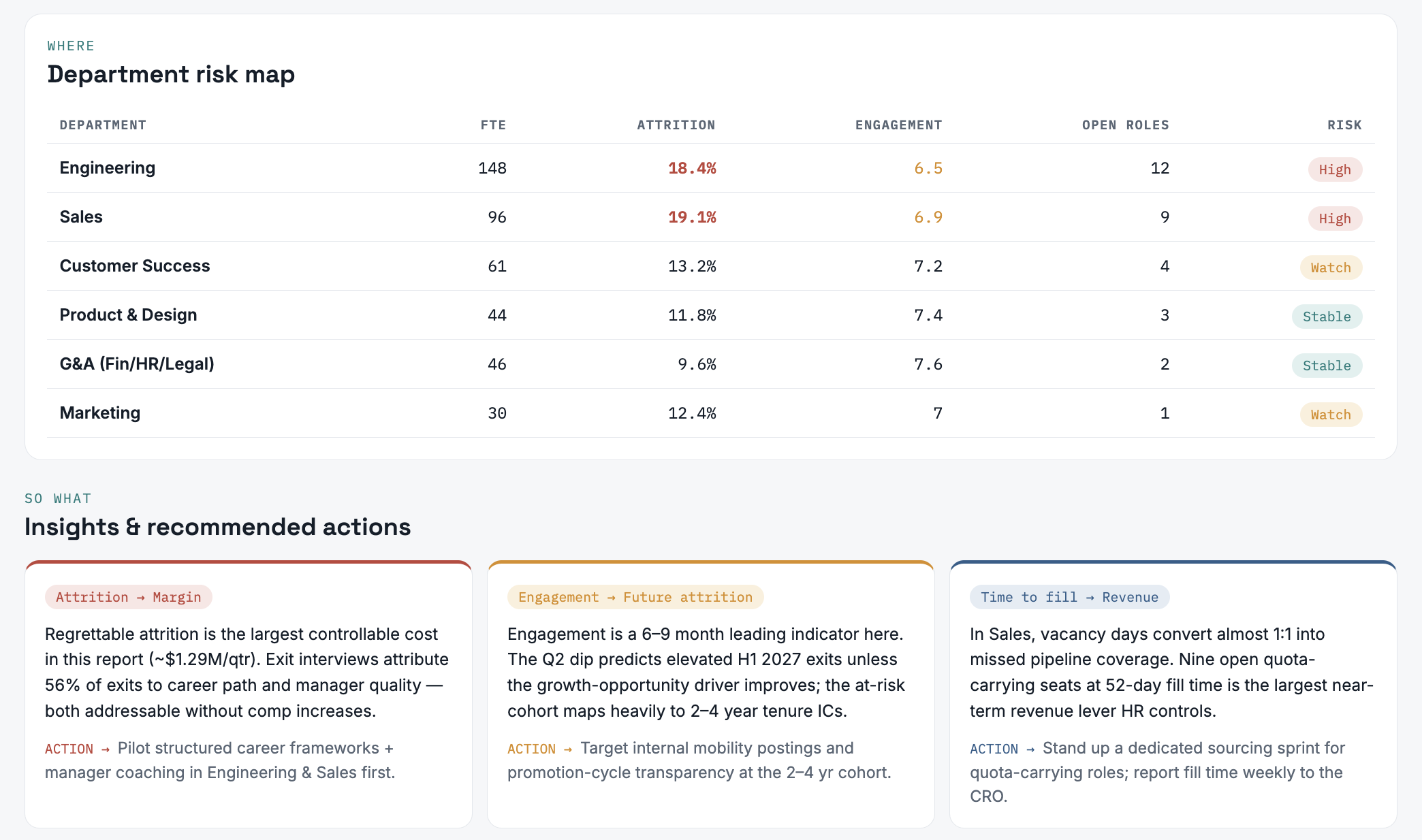
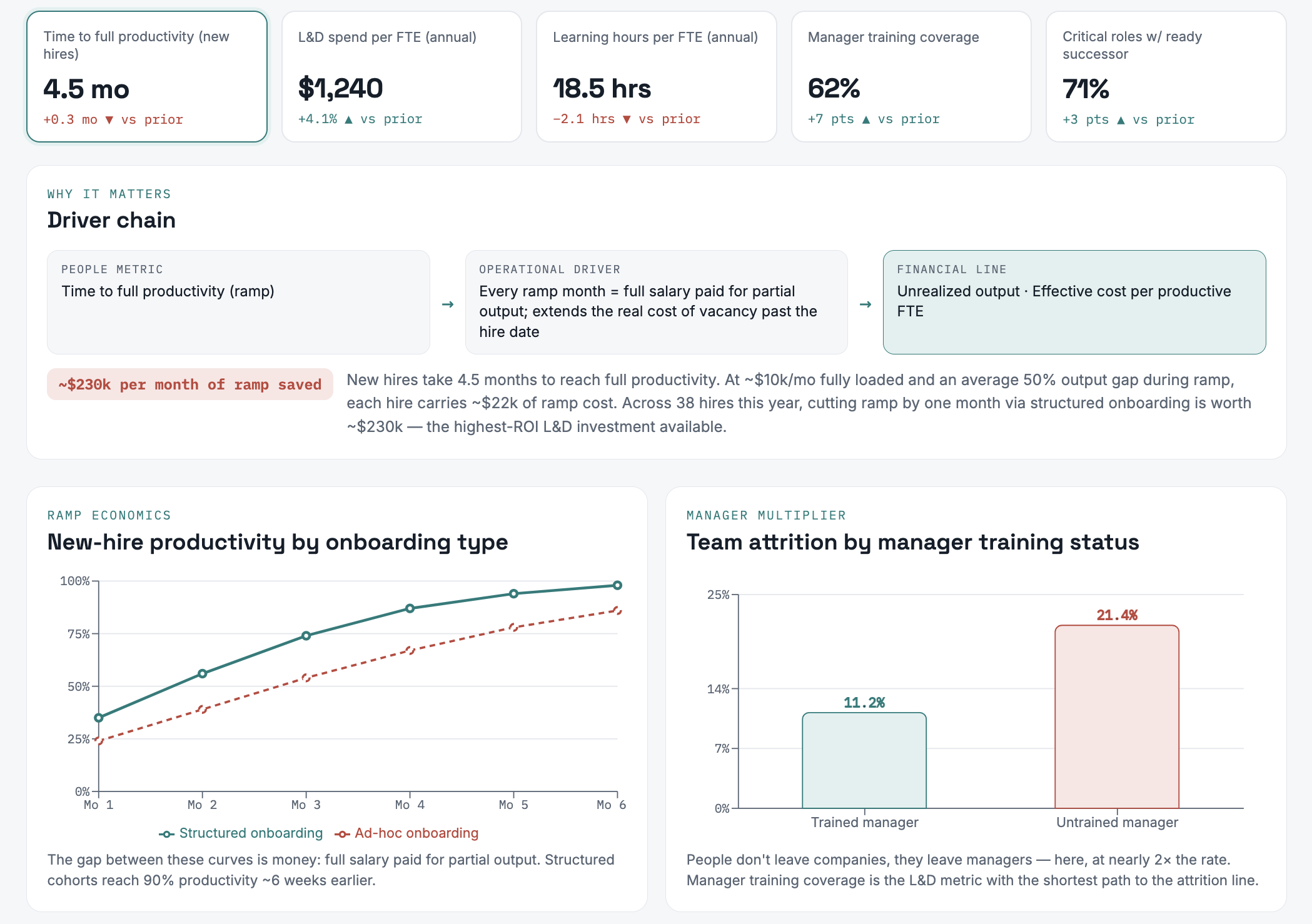
Compensation problems rarely arrive as compensation problems. They arrive as a resignation, a manager asking for an exception, or a candidate turning you down — and by then you're negotiating without data, one person at a time, building inequities you'll pay to fix later.
The fix is structural, and it's less work than most companies expect.
What that includes:
Market benchmarking against real data for your industry, geography, and stage
Salary bands and job leveling built for consistent hiring, promotions, and compensation decisions
Pay equity analysis and compensation audits
Pay transparency compliance for applicable states
Compensation philosophy development aligned with your business strategy
Job architecture and career framework design
Offer evaluation and compensation recommendations for key hires
Merit increase and promotion frameworks
Bonus and incentive plan design
Compensation support during reorganizations and organizational growth
Internal pay equity reviews following acquisitions or rapid hiring
Annual compensation planning and budget guidance
Manager tools and training for compensation conversations
Job description review and alignment with compensation levels
Case Study: Building a U.S. Compensation Framework
Challenge: Headquarters' compensation practices weren't aligned with the U.S. market, making hiring and pay decisions inconsistent.
Solution: Developed salary bands, job architecture, market benchmarking, and a performance-based bonus program tailored to the U.S. workforce.
Business Impact:
48.5% reduction in turnover*
12% improvement in six-month retention*
25% improvement in recruiting candidate quality*
15% reduction in recruiting costs*
*Results achieved as part of a broader HR transformation that included compensation, recruiting, performance management, and leadership development.
The conversations you've been putting off
Investigations, terminations, performance problems that have gone on too long, and complaints that involve someone senior. These are the situations where doing it right and doing it fast are the same thing, and where a founder's instinct to handle it personally usually makes it worse.
This work is confidential, so I can't share the files with you. What I can show you is what it looks like in practice.
How this looks in practice
Building HR from the ground up.
A fast-growing company had no formal HR infrastructure. Policies, compensation practices, performance management, and compliance had all evolved independently as the business scaled. I built the foundation, including a multi-state handbook, salary bands, performance management, leadership training, and core processes, so leaders had consistent guidance and employees knew what to expect.
Navigating international growth.
An organization was expanding across multiple regions while managing a workforce spread over several countries and visa programs. I partnered with leadership and immigration counsel to oversee employment-based visa tracking, support international hiring, implement Employer of Record solutions where appropriate, and keep HR practices aligned with local employment requirements.
Helping leaders manage performance with confidence.
A client's managers avoided difficult performance conversations because they had no consistent process to rely on. Rather than jumping straight to corrective action, I built clear performance expectations, coached leaders on documentation and feedback, and put a structured approach in place, one that gave employees a fair chance to improve while protecting the business when hard decisions became necessary.
Turning HR into a business function.
A client relied on HR primarily for administrative tasks, while leaders struggled with inconsistent hiring, onboarding, and managerial practices. I partnered with leadership to redesign key processes, strengthen managers' capabilities, and build systems that supported growth rather than reacting to problems a more scalable function that kept pace as the business expanded.
How We Work Together
Every business is different, but my approach is consistent: understand the business first, solve today's challenges, and build the systems you'll need tomorrow.
1. Discovery
We start with a conversation about your business, your people, and what's actually not working. I'll learn where your organization is today, where you're headed, and where HR can make the biggest difference, whether that's ongoing fractional leadership or support with a specific project.
2. Assessment & Prioritization
I review your current HR practices, identify compliance risks, and find the gaps between where you are and where you need to be.
You'll get clear recommendations, not a hundred-page report that sits on a shelf—and together we'll decide what to tackle first, based on what will move the business most.
3. Implementation
This is where I differ from most consultants: I don't hand you a list and walk away.
I partner with your leadership team to do the work, build processes, write documentation, coach managers, and resolve employee issues. Whether it's rewriting a handbook, designing a compensation structure, leading an investigation, or helping you hire, I'm in it alongside your team, not advising from the sidelines.
4. Ongoing Partnership
As your business changes, your HR needs change with it.
I stay a strategic partner to your leadership team, navigating growth, supporting managers, helping make difficult people decisions, and staying ahead of compliance changes. Most engagements begin with a short assessment period before settling into ongoing support.
Let's talk about your team
A free consultation is a conversation about what's actually happening, not a sales call. If it turns out you don't need me, I'll tell you.